
Big wins in Starburst slots are waiting for you!
Home → Strategy
Starburst Strategy
Approaching Starburst sensibly
Starburst, a NetEnt creation from 2013, operates with a theoretical return of 96.09% RTP. This figure represents the long-term average payout over hundreds of thousands of spins, establishing a house edge of 3.91%. Players should understand that this percentage dictates expected losses over time rather than short-term session outcomes. The low volatility ensures frequent but smaller wins, which helps preserve the bankroll during extended play sessions.
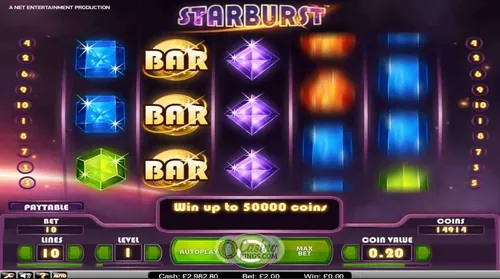
The game features expanding wilds on reels two, three, four, and five, triggering up to three consecutive respins. These mechanics contribute to the win-both-ways pay structure, allowing symbols to form winning combinations from both left-to-right and right-to-left. This dual-direction feature increases hit frequency compared to traditional single-way slots. Understanding these specific rules helps players manage expectations regarding symbol alignment and potential payouts per spin.
Unlike Mega Joker, which offers a 99.00% RTP and very high volatility, Starburst provides a more stable, lower-risk experience. Mega Joker’s maximum win is capped at 200x, while Starburst allows for a significantly higher maximum win of 500x. This distinction means Starburst can deliver larger individual payouts despite its lower overall return percentage. Players seeking consistent engagement might prefer Starburst’s predictable rhythm over Mega Joker’s erratic variance profile.
Bankroll rules that hold up
A defined bankroll must cover the total cost of all bets placed before any bonus funds are considered. For instance, a 300% welcome bonus up to €2,000 plus 100 free spins requires separate base capital for wagering. This initial deposit remains untouched until the bonus conditions are fully met or the player chooses to withdraw eligible winnings. Proper separation prevents accidental depletion of the primary funding source required to unlock promotional value effectively.
Flat betting involves wagering the same stake every round, such as maintaining a constant bet within the 0.01 to 100 range. This strategy avoids the pitfalls of progressive staking, which raises stakes after losses and only shortens the time to ruin. By keeping wagers static, players extend their gameplay duration against the 96.09% RTP without accelerating potential financial decline. Consistency in stake size is crucial for managing risk across multiple sessions over an extended period.
The operator-configurable RTP range spans from 90.05% to 99.06%, meaning actual returns can vary significantly between different casinos. Some official pages list 96.08%, creating minor discrepancies that affect long-term expected loss calculations. Players should verify the specific RTP setting for their chosen platform before committing significant funds. Awareness of this variability ensures accurate bankroll planning based on the exact mathematical edge present in their current game environment.
Bet sizing against volatility
Starburst exhibits low volatility, meaning wins occur frequently but are generally smaller in magnitude compared to high-variance titles. This characteristic suits players who prefer steady engagement over rare, massive jackpots. With a maximum win cap of 500x, the potential payout ceiling is substantial yet achievable through the expanding wild mechanic. Adjusting bet sizes to match this volatility profile helps maintain a sustainable playing rhythm over many hours.
The fixed ten paylines require bets on all lines simultaneously, influencing the minimum total stake per spin. At the lowest bet of 0.01, the cost per spin is minimal, allowing for extensive testing of the game’s mechanics. Conversely, the maximum bet of 100 exposes the bankroll to rapid depletion if losing streaks persist. Balancing bet size against available funds ensures that the low volatility does not lead to premature exhaustion of resources during play.
Unlike slots with complex bonus rounds, Starburst lacks a dedicated free spins feature, relying instead on the expanding wild respins. This simplicity reduces the variance introduced by unpredictable bonus triggers, making bankroll management more straightforward. Players can predict their expected loss rate more accurately given the fixed 96.09% RTP and known max win. Understanding this mechanical constraint allows for precise calculation of how many spins a given bankroll can sustain.
Session limits worth setting
Time-based session limits prevent fatigue-induced errors when navigating the 5-reel, 3-row layout of Starburst. Since the game releases no new content since 2013, familiarity with the interface grows quickly, encouraging longer play periods. Setting a strict time boundary ensures that players do not lose track of their spending habits due to repetitive engagement. A predefined stop-time helps maintain discipline regardless of whether the player is ahead or behind on the day.
Financial loss limits should be calculated based on the acceptable percentage of the total bankroll one is willing to forfeit. Given the 3.91% house edge, prolonged play inevitably leads to losses unless luck heavily favors the player. For example, risking 10% of a 100€ bankroll means stopping play once that threshold is reached, irrespective of recent wins. This hard stop protects the remaining funds from being consumed by the mathematical expectation over thousands of spins.
Win limits provide a mechanism to secure profits before they are eroded by the inherent house advantage. If a player reaches the maximum win of 500x their bet, considering cashing out preserves those gains against future variance. Unlike Mega Joker’s 200x cap, Starburst offers higher upside potential, making profit protection even more critical. Establishing a target profit level ensures that successful sessions result in tangible withdrawals rather than reversed fortunes.
Why chasing losses fails
Chasing losses involves increasing bet sizes after deficits to recover previous money, a tactic that accelerates bankroll depletion. In Starburst, where the maximum win is 500x, attempting to recoup small losses through larger stakes ignores the fixed odds. The 96.09% RTP applies equally to every spin, regardless of previous outcomes or bet adjustments. This mathematical reality makes recovery strategies futile and dangerous for anyone managing a finite bankroll responsibly.
The low volatility of Starburst creates an illusion of control, as frequent small wins mask the gradual erosion of funds. Players may mistakenly believe that a large win is imminent after a series of losses, prompting risky behavior. However, each spin is independent, and the expanding wild feature does not guarantee compensation for prior deficits. Recognizing this independence is crucial for avoiding the psychological trap of believing that past results influence future probabilities.
Unlike progressive staking systems that claim to beat the house edge, no strategy alters the built-in 3.91% disadvantage. Attempting to chase losses in a game with a 90.05%-99.06% configurable RTP range only amplifies risk exposure. The most effective approach is accepting the statistical outcome and sticking to predetermined flat betting levels. This disciplined method minimizes emotional decision-making and preserves the bankroll for future sessions with clearer objectives.
Starburst: key facts
| Parameter | Value |
|---|---|
| Game | Starburst |
| Studio | NetEnt |
| Released | 2013 |
| RTP | 96.09% |
| House edge | 3.91% |
| Volatility | low |
| Max win | 500x |
| Reels | 5 reels, 3 rows |
| Paylines / ways | 10 fixed paylines |
| Bet range | 0.01 – 100 |
Common systems and their limits
Starburst by NetEnt offers a theoretical return of 96.09% over extended play sessions, which defines the mathematical ceiling for player returns on mobile devices. This percentage indicates that the casino retains a house edge of 3.91% across all spins, meaning consistent profitability is statistically impossible for the average user regardless of betting patterns. Players should understand that no strategy can overcome this built-in advantage, as the random number generator ensures each outcome remains independent of previous results. The low volatility further restricts large wins, capping potential payouts at 500x the stake.
Flat betting requires wagering the same amount on every spin, typically ranging from 0.01 to 100 credits per round in the Starburst slot interface. This method preserves bankroll longevity because it avoids the rapid depletion caused by chasing losses through increased stakes during losing streaks. Mobile users benefit from this stability since the fixed paylines structure demands consistent engagement without complex adjustments between rounds or sessions. Consequently, players can monitor their spending more effectively while enjoying the expanding wild respins feature without financial pressure.
Unlike Gonzo's Quest with its medium-high volatility, Starburst provides frequent but smaller wins due to its specific design parameters set by NetEnt. The maximum win cap of 500x prevents dramatic swings in balance, making it suitable for cautious mobile gamers who prefer steady entertainment over high-risk gambling. This contrast highlights why progressive staking fails here; raising bets after losses only accelerates bankroll exhaustion without altering the underlying 96.09% return rate. Therefore, understanding these mechanics helps players set realistic expectations for their mobile gaming sessions and budget accordingly.
Flat betting explained
Flat betting involves placing an identical stake on every single spin within the Starburst slot, utilizing the fixed bet range from 0.01 up to 100 currency units. This approach minimizes variance impact by ensuring that neither winning nor losing streaks drastically alter the total bankroll duration compared to fluctuating stake sizes. Mobile players appreciate this simplicity as it removes decision fatigue during the expanding wild respin sequences, allowing focus on the game's visual feedback. The result is a predictable expenditure pattern that aligns well with strict daily loss limits set by responsible gambling tools available on most platforms.
The 10 fixed paylines in Starburst mean that every spin costs the same regardless of symbol alignment, reinforcing the flat betting strategy's efficiency on mobile screens. Since there are no dedicated free spins features, the base game mechanics remain constant, requiring no adjustment to bet size when special symbols like wilds appear. This consistency allows players to calculate exact costs per hour based on spin speed, facilitating better budget management for extended mobile play sessions. Ultimately, this method supports sustainable entertainment by preventing impulsive decisions that often lead to unnecessary financial strain during prolonged gameplay periods.
Comparing Starburst to Gonzo's Quest reveals how flat betting suits low volatility games better than those with higher risk profiles and larger max win caps. While Gonzo's Quest offers up to 2,500x wins, Starburst’s 500x maximum requires patience rather than aggressive betting to achieve any significant payout on mobile devices. The expanding wild feature triggers up to three consecutive respins, providing additional chances to win without increasing the initial stake amount per round. Thus, maintaining a constant bet ensures that the theoretical return of 96.09% remains the primary metric for evaluating long-term performance rather than short-term luck.
Progressive staking risks
Progressive staking involves increasing the bet size after a loss in an attempt to recover previous funds, a dangerous practice particularly risky in low volatility slots like Starburst. Since the game offers a maximum win of only 500x and lacks complex bonus rounds, recovering losses through raised stakes often depletes the bankroll before any significant win occurs. Mobile users face heightened risks due to faster spin speeds on touchscreens, which can accelerate financial loss if the player lacks discipline during losing streaks. The house edge of 3.91% remains unchanged regardless of bet size, meaning progressive strategies cannot mathematically improve the player's expected return over time.
The 96.09% RTP indicates that for every 100 currency units wagered, approximately 96.09 units are returned to players over millions of spins, rendering recovery systems ineffective. When players raise stakes after losses in Starburst, they expose themselves to greater variance without gaining any advantage in the expanding wild respin mechanics. This behavior contradicts responsible gambling principles, especially on mobile where ease of access facilitates rapid, unmonitored betting sessions that drain funds quickly. Understanding this limit helps players avoid the illusion of control and instead focus on managing their bankroll through conservative, flat betting approaches.
In contrast to Gonzo's Quest, which has a medium-high volatility and a 95.97% RTP, Starburst’s design discourages aggressive staking due to its limited win frequency and lower max payout. The 500x win cap means that even successful progressive strategies yield modest returns relative to the risk incurred during the escalation phase. Mobile players must recognize that the random number generator ensures independence between spins, making past outcomes irrelevant to future results in the slot. Therefore, avoiding progressive staking preserves capital longer, allowing for more enjoyable and sustainable gaming experiences without the stress of chasing unrecoverable losses.
What the maths actually allows
The theoretical return to player of 96.09% in Starburst represents the long-term average payout expected over hundreds of thousands of spins on mobile devices. This figure implies a house edge of 3.91%, meaning the casino retains this portion of all wagers placed, regardless of short-term fluctuations or individual session outcomes. Players should view this percentage as a statistical expectation rather than a guarantee for any single day or week of playing the NetEnt title. Understanding this mathematical reality helps manage expectations, as no strategy can alter the fundamental odds embedded within the game's random number generator algorithm.
With a low volatility rating, Starburst delivers frequent small wins rather than rare large jackpots, affecting how quickly the 96.09% return materializes during mobile play sessions. The maximum win cap of 500x sets a hard limit on potential payouts, restricting the upside for players attempting to maximize returns through extended play. This constraint means that even with optimal betting, the total return will closely track the theoretical RTP over time, minus the inevitable house edge accumulation. Consequently, players seeking substantial profits may find other titles more appealing, while those preferring steady entertainment should adjust their bankroll expectations accordingly.
Comparing Starburst to Gonzo's Quest, which boasts a 95.97% RTP and a 2,500x max win, illustrates how different mathematical designs cater to varying player preferences on mobile. While Gonzo's Quest offers higher variance and larger potential payouts, Starburst’s lower volatility provides a smoother experience aligned with its 96.09% return profile. The 10 fixed paylines and expanding wild respins create a predictable rhythm that supports flat betting strategies without the extreme swings seen in higher volatility games. This distinction allows players to choose based on their risk tolerance, knowing that the mathematical framework dictates the ultimate likelihood of profit or loss.
Reading variance honestly
Variance in Starburst is classified as low by NetEnt, indicating that win frequencies are relatively high but individual payout amounts tend to be smaller compared to high-variance slots. This characteristic influences how the 96.09% RTP manifests during actual gameplay, as players experience fewer dry spells but also miss out on massive jackpot opportunities typical of other games. Mobile users benefit from this stability since it reduces the emotional rollercoaster associated with losing streaks, promoting a more relaxed gaming atmosphere. However, the 500x maximum win cap reinforces the limitation of low variance, ensuring that even lucky runs remain bounded within predictable financial parameters.
The expanding wild feature triggers up to three consecutive respins, adding a layer of excitement without significantly altering the underlying low volatility nature of the slot. These respins provide additional chances to form winning combinations on the 10 fixed paylines, yet they do not change the overall return percentage or house edge structure. Players should recognize that while these mechanics enhance engagement, they cannot compensate for the mathematical disadvantage imposed by the 3.91% house edge over time. Understanding this balance helps players appreciate the game's design while maintaining realistic expectations about their potential returns during mobile sessions.
Gonzo's Quest differs markedly with its medium-high volatility and 95.97% RTP, offering larger but less frequent wins compared to Starburst’s steady output. The 2,500x max win in Gonzo's Quest contrasts sharply with Starburst’s 500x limit, highlighting how variance impacts both risk and reward profiles for mobile gamblers. While Starburst’s low volatility suits players seeking extended playtime, those drawn to Gonzo's Quest might prefer its Avalanche feature and higher potential payouts despite the slightly lower RTP. Recognizing these differences enables informed choices, allowing players to select titles that align with their personal risk appetite and entertainment goals.
Learning the game in demo first
NetEnt released Starburst in 2013 as a five reel three row slot with ten fixed paylines. This layout creates a simple structure for mobile players to understand win-both-ways mechanics without complex rules. Beginners can practice expanding wild respins up to three times without risking real funds during the trial phase.
The theoretical return to player stands at 96.09 percent, which establishes a house edge of 3.91 percent over long runs. Official operator configurations may vary between 90.05 percent and 99.06 percent depending on specific casino settings. Mobile users should verify their current RTP before starting any session to ensure they understand the actual mathematical expectation.
Divine Fortune by NetEnt offers a medium volatility experience with a maximum win of 1000x compared to Starburst's 500x cap. This higher variance title appeals to players seeking larger payouts but requires more patience than the low volatility Starburst. Understanding these differences helps mobile gamers choose the right volatility level for their preferred play style.
Adjusting stakes to your budget
Starburst allows bets ranging from 0.01 to 100 per spin across its ten fixed paylines. This wide range accommodates both cautious bankroll management and high roller strategies on mobile devices. Players can set precise stakes to control their spending rate while enjoying the expanding wild feature.
A flat betting strategy using the minimum stake of 0.01 extends playtime significantly compared to progressive staking methods. Progressive staking raises stakes after losses, which only shortens the time to ruin without changing the built-in edge. Consistent small bets allow mobile players to experience more respins within a limited daily budget.
Divine Fortune features a medium volatility profile that impacts how quickly a bankroll depletes compared to Starburst's low volatility. The maximum win of 1000x in Divine Fortune contrasts with Starburst's 500x limit, affecting potential payout frequency. Mobile users should calculate their total session cost based on these volatility differences before depositing funds.
Recognising a bad session
The low volatility of Starburst means frequent small wins rather than large jackpots during typical gameplay sessions. Mobile players might misinterpret this steady pattern as progress when the house edge of 3.91 percent steadily erodes their balance. Recognizing this pattern prevents chasing losses that inevitably lead to faster bankroll depletion on smaller screens.
Progressive staking systems raise stakes after losses, which drastically accelerates bankroll exhaustion regardless of the game's theoretical return. This approach does not change the built-in edge and only increases the risk of rapid financial loss. Mobile users should avoid these systems because the smaller display makes tracking cumulative losses more difficult.
Divine Fortune's medium volatility produces longer dry spells between wins compared to Starburst's consistent small payouts. The 1000x max win potential attracts players who chase big hits but often face extended periods without returns. Identifying these variance patterns helps mobile gamers decide when to stop playing before their budget is fully consumed.
Stopping while ahead
Starburst offers a maximum win of 500x the bet size, which represents a significant target for mobile players. Achieving this cap through consecutive expanding wild respins provides a clear benchmark for ending a profitable session. Setting a withdrawal limit at this threshold prevents giving back winnings during subsequent losing streaks.
The theoretical return of 96.09 percent indicates long-term average performance but guarantees nothing for individual mobile sessions. Short-term variance can easily erase early profits despite the favorable mathematical expectation over hundreds of thousands of spins. Mobile users should cash out once they reach their predefined profit goal rather than chasing further gains.
Divine Fortune's 1000x max win potential tempts players to continue spinning after hitting modest targets on Starburst. However, switching games mid-session complicates bankroll tracking and increases the likelihood of irrational decision-making on mobile devices. Maintaining discipline by stopping at predetermined levels protects the initial investment from inevitable regression to the mean.
Responsible play in practice
Bankroll management requires setting aside a specific amount of money for play that you can afford to lose completely. Flat betting at consistent stakes helps maintain control over spending rates during extended mobile gaming sessions. This disciplined approach prevents impulsive decisions that often arise when trying to recover losses on smaller screens.
The house edge of 3.91 percent ensures that casinos retain a portion of all wagers over time regardless of strategy. Mobile players must accept this mathematical reality as a cost of entertainment rather than a pathway to reliable income. Understanding this edge prevents unrealistic expectations about winning consistency during short-term gameplay sessions.
Bonus terms like 300 percent welcome bonuses up to 2000 euros plus 100 free spins require careful wagering analysis. These promotions often impose strict conditions that affect how quickly mobile players can withdraw their bonus funds. Reading all terms thoroughly prevents unexpected restrictions on accessing winnings derived from promotional credits.
DemoRTP & VolatilitySymbols & PayoutsBonus FeaturesStrategyBonusesMobileDownload & AppMax WinSimilar GamesReviewFAQSitemap
Starburst slots 2025